Wire, fabric or plastic dog crate: which to buy in the UK
The short answer
- Our pick
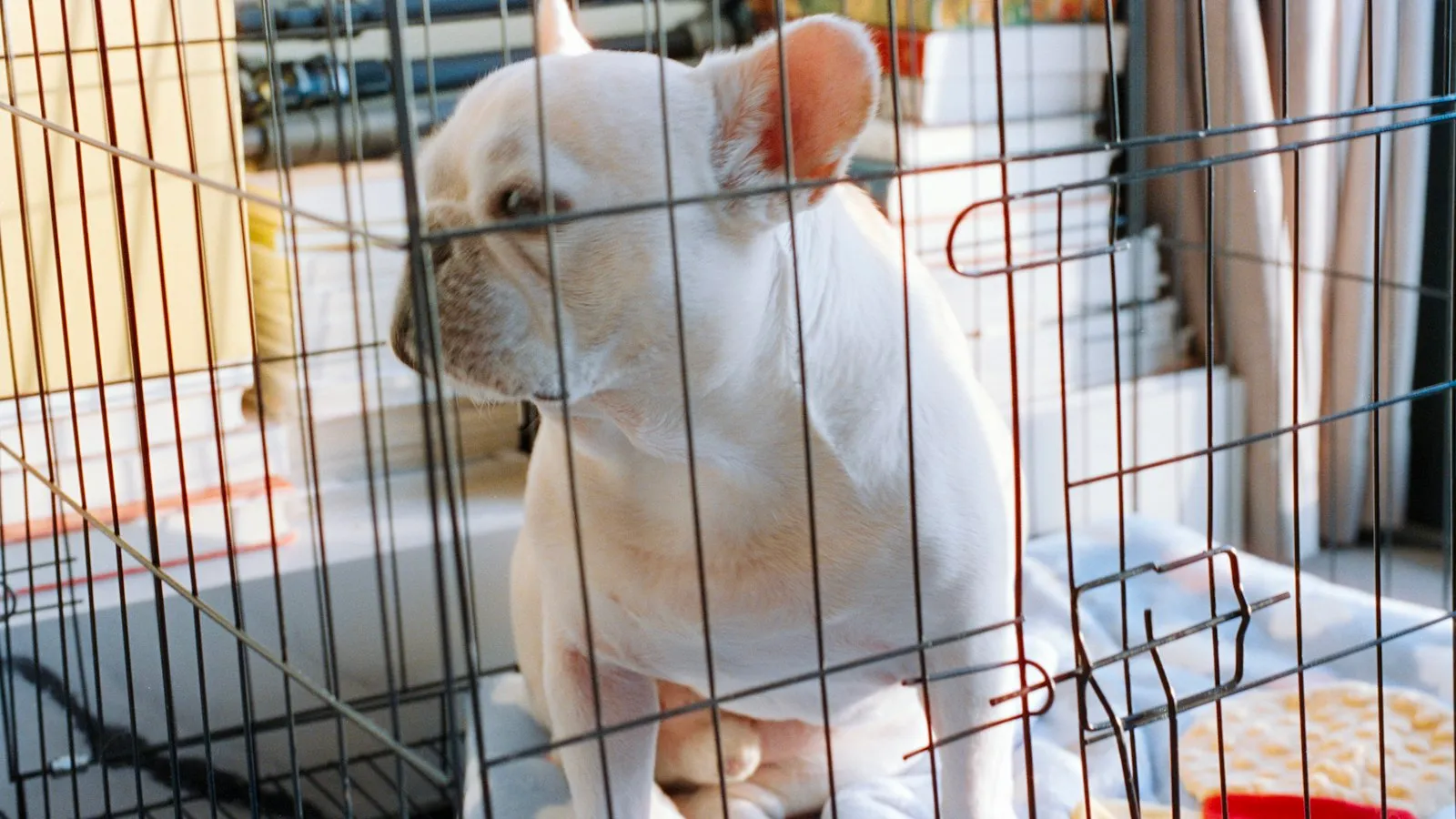
- A wire crate for the house. The zooplus Double Door Crate runs from £27.39 (S) to £60.39 (XXL) in November 2026, with a removable tray and two doors. Buy a separate plastic box only if the dog will travel by car regularly.
- On a budget
- The wire crate in the size the adult dog needs. At L it was £37.79 and at XL £52.29, which is less than most plastic boxes cost at the smallest useful size.
- Don't buy
- A fabric crate for a puppy or any dog that chews or scratches. PDSA says fabric crates suit neither, and the zooplus listing itself warns that a dog left alone in the First Class crate could tear the material and escape.
On this page
Every guide to dog crate materials gives the same answer in a different order: wire is sturdy, fabric is light, plastic is cosy. Fine. None of it tells you what to buy, because the material is not really the decision.
The decision is where the crate will spend its life. A crate that lives in the corner of your lounge and a crate that rides in the boot of a car are two different jobs, and the cheapest way to get it wrong is to pick one crate and ask it to do both.
The short version
| If the crate will mostly be | Buy | Price (zooplus, November 2026) |
|---|---|---|
| In the house, for a puppy or a chewer | Double Door wire crate | £27.39 (S) to £60.39 (XXL) |
| A hotel room or holiday cottage, for a settled adult dog | First Class fabric crate | £28.79 (M), £36.69 (L), £48.79 (XL) |
| In the car, up to 40kg | Ferplast Atlas Scenic plastic box | £79.99 (size 80), £79.99 (size 100, was £94.99, sold out on 10 November) |
| In the car or on a train, up to 50kg | Trixie Gulliver plastic crate | £88.79 (size 4) to £139.99 (size 7) |
These are listed prices before the zooplus vouchers some of the pages offered, and they move often.
What the UK charities actually say about materials
Less than the shopping guides do. Dogs Trust’s crate page does not choose a material at all. It asks for a crate that is sturdy and unlikely to collapse accidentally, and large enough for a puppy to stand up, turn around, lie down, sit down, wag their tail and stretch out fully. The RSPCA describes a typical crate as “a wire frame with a removable tray in the base” and says they come in “many different sizes, designs and materials”, without ranking them.
PDSA is the only one of the three that sorts them. Wire crates are “durable, sturdy, and well-ventilated” and suit most dogs, especially active ones. Fabric is “less durable than a wire crate but lightweight and easy to fold away.” And PDSA’s page says nothing about plastic crates at all. So when a retailer tells you plastic is the safe choice, that is the retailer talking, not a charity.
Wire: the default, and why
A wire crate is the cheapest way to get the two things that matter at home: a tray you can slide out when there is an accident, and bars that let the dog see you. The RSPCA’s description of the typical crate is a wire one, and PDSA’s recommendation of wire for most dogs is the only material ranking in the UK charity guidance I read.
The zooplus Double Door Crate is a plain example. It folds flat, has a removable zinc-coated tray with a 3cm border, and two lockable doors, front and side. In November 2026 the sizes were:
| Size | Dimensions (L x W x H) | Price |
|---|---|---|
| S | 63 x 55 x 61 cm | £27.39 |
| M | 78 x 55 x 61 cm | £34.89 |
| L | 89 x 60 x 66 cm | £37.79 |
| XL | 109 x 69 x 75 cm | £52.29 |
| XXL | 118 x 78 x 84 cm | £60.39 |
- Good: cheap, folds flat, two doors so you can fit it against a wall, and the price barely rises until the very large sizes.
- Bad: the page does not mention a divider, and a divider is the thing that lets you buy once for a growing puppy. Check the listing, or look at the other wire crates in the best-crates list that do include one. Wire is also noisy and not pretty.
I should say how I think about size, because it is the other half of this choice. At the kennel I ran in Rio, the rule was simple: the dog must stand without lowering the head, and lie on its side with all four legs stretched out. My Dobermann, Hercules, was once in a box that was too short for him. He did not settle. Put into a giant crate, he was asleep within minutes. That is a single dog, not a study, but it is why I stopped believing a snug crate is always the kind one. The size guide covers how to reach the adult number.
Fabric: the one to be careful with
PDSA says fabric crates are lighter and easier to fold, and that they do not suit puppies or dogs that chew. The zooplus First Class Basic Crate backs that up in its own words. The listing says: “Do not leave your pet unattended in this crate as there is a risk that your pet could tear the material and escape.” It also says the crate “is not designed for carrying pets”, so it is not a travel crate either, despite the folding frame.
| Size | Dimensions (L x W x H) | Max load | Price |
|---|---|---|---|
| M | 61 x 46 x 53.5 cm | 20 kg | £28.79 |
| L | 79 x 53.5 x 66 cm | 28 kg | £36.69 |
| XL | 96.5 x 66 x 73.5 cm | 45 kg | £48.79 |
Prices are for the grey and green version; the red one was a little dearer in some sizes.
Several reviews on the same page describe mesh being torn: one owner said a dog tore the door to get out, another that a puppy chewed through the mesh. Those are reviews, not tests, and I have not tested the crate. But they match what the listing itself warns about.
- Good: very light, folds small, and cheaper than a good wire crate at the same size. It suits a calm adult dog in a hotel room, with you in it.
- Bad: no help against a teething puppy, and no use in the car.
Plastic: really a travel box
Plastic crates earn their place for one reason, and it is not the house. They are enclosed on the sides, so they feel like a den, and they are made to be carried or put in a boot. But the two plastic models I opened at zooplus both describe themselves as transport boxes, and the price shows it.
The Ferplast Atlas Scenic is a plastic box with a metal grid door that slides, locks from the outside and can be removed. The listing says it is designed as a car transport box, recommends measuring your boot against the dimensions, and gives weight limits of up to 20kg (size 80) and up to 40kg (size 100). The Trixie Gulliver is a plastic body with side grilled windows and a door that opens outwards or comes off, described as ideal for travelling by plane, train or car. It stops at 50kg in size 7.
| Crate | Dimensions (L x W x H) | Max dog weight | Price |
|---|---|---|---|
| Ferplast Atlas Scenic 80 | 82 x 51 x 61 cm | 20 kg | £79.99 |
| Ferplast Atlas Scenic 100 | 100 x 60 x 66 cm | 40 kg | £79.99 (was £94.99, offer ends 17 November, sold out on 10 November) |
| Trixie Gulliver 4 | 72 x 52 x 51 cm | 18 kg | £88.79 |
| Trixie Gulliver 5 | 79 x 58 x 60 cm | 25 kg | £111.49 |
| Trixie Gulliver 6 | 92 x 64 x 64 cm | 38 kg | £133.99 |
| Trixie Gulliver 7 | 104 x 73 x 75 cm | 50 kg | £139.99 |
- Good: a handle and a boot-friendly shape, and the Gulliver can take a separate wheel set (£21.39 in November 2026).
- Bad: it costs about twice what a wire crate of the same size does, and the Gulliver’s reviews report that some airlines refused it and that one arrived cracked. The page itself says to check with your airline first.
One more catch with plastic. The RSPCA says not to travel with a puppy in an adult-sized crate. A big plastic box for a growing dog has the same problem as a big wire crate, with no divider to fix it. So for a puppy you either buy the box in stages or you do the car trips in a size that fits now.
For what the law and the evidence say about restraining a dog in a car, read the car travel guide. I am not repeating its numbers here, and I have not seen a crash standard for any of these.
The covering question
All three charities I read allow a blanket over a crate. PDSA suggests a blanket over the top and sides, with the front left open, to cut noise and draughts. Dogs Trust says the same. The RSPCA says a cover over part of the crate can help nervous dogs. This works best on wire, which is another quiet argument for it: the bars let air through under the blanket, and you can change how much of the crate is covered night by night.
Plastic is already enclosed, so a blanket adds little. Fabric you should not leave unwatched, covered or not.
What I would not spend extra on
A plastic box for a dog that never travels. At £79.99 to £139.99 it costs twice a wire crate and offers nothing at home that a blanket over wire does not.
A second crate “for the car” before you know you need one. If the car trips are rare, a wire crate in the boot may do, and you can add a travel box later if the trips become regular.
A heavier crate than the dog needs. The weight limits above are real limits. A 38kg dog in a size 5 (25kg) is the wrong box, however much padding you add.
Who should not buy any of these
If the dog already sleeps settled, house-trained and loose in a room, and you never drive anywhere with them, a crate is optional. Playpen or crate goes through the case for neither.
And if the plan is to leave the dog in it through a working day, the material is irrelevant. The RSPCA says it is never acceptable to shut a dog in a crate all day, and PDSA gives a cap of three hours at a time, less for dogs not used to it.
What to do next
Work out the adult size first: the crate size guide turns a breed and a weight into inches. My Boxer, Bóris, had a growth spurt between eight and ten months, so I would rather you measured for the adult dog than for the puppy.
Then read the best puppy crates list for the wire models with dividers, and the first-night guide for how to set one up.
Material guidance is quoted from PDSA, Dogs Trust and the RSPCA crate pages, read in November 2026 (Blue Cross returned an error and is not cited). Prices, sizes and weight limits are from the zooplus UK product pages for the Double Door Crate, First Class Basic Crate, Ferplast Atlas Scenic and Trixie Gulliver, opened in November 2026, listed before voucher discounts, and they change often. Wire crate prices rechecked on 11 November 2026. The First Class prices shown are the grey/green variants (red variants cost more), and the Ferplast size 100 was sold out on 10 November. I have not tested these crates, and the Hercules and Bóris examples are from my own dogs. Nothing here is veterinary or behavioural advice. For a dog showing real distress when confined, speak to your vet or a qualified behaviourist.